A radon result can change the way you evaluate a house, but it does not have to stop a purchase or create panic. This radon testing guide explains what Connecticut buyers, sellers, and homeowners need to know: when to test, how testing works, what the numbers mean, and how to respond with clear next steps.
Radon is an invisible, odorless radioactive gas formed naturally as uranium breaks down in soil and rock. It can enter a home through cracks in foundations, gaps around pipes, sump pits, crawl spaces, and other openings in contact with the ground. Once indoors, radon can accumulate to levels that increase long-term lung cancer risk.
Connecticut has areas with elevated radon potential, but radon cannot be predicted accurately by a town map, a neighbor’s result, or the age of a house. The only way to know the level in a specific home is to test it.
Why radon testing matters in Connecticut
For a homebuyer, radon testing is a practical part of due diligence. A home can look well maintained, have a clean inspection report, and still have elevated radon because the gas comes from the soil below it. The issue is not usually visible during a standard visual home inspection.
For sellers, testing before listing can prevent a late surprise during negotiations. If a result is elevated, there is time to understand the issue, obtain mitigation estimates, and decide whether to install a system before the home goes on the market.
As for homeowners, testing is a health and maintenance decision. Radon levels can change over time because of weather, renovations, foundation work, HVAC changes, or how the home is used. A prior low reading is useful information, but it is not a permanent guarantee.
When should you test a home for radon?
Test a home before completing a purchase whenever possible, especially if it has a basement, crawl space, or living area below grade. A test is valuable even when the basement is unfinished, because radon can move through the structure and affect the levels where people spend time.
Homeowners should also consider testing after major renovations, when finishing a basement, before converting lower-level space into a bedroom or office, or when moving into a home that has never been tested. If a mitigation system is already installed, periodic retesting confirms that the system is continuing to reduce radon effectively.
Winter is often a convenient time to test because houses are closed up, but radon testing can be performed throughout the year. One season does not automatically make a result invalid. What matters is using an appropriate method and following the required testing conditions.
Can you rely on a neighbor’s radon result?
No. Nearby homes may have very different readings. Soil conditions can vary over short distances, and each house has its own foundation design, ventilation patterns, heating system, sump configuration, and air pressure. A neighbor’s test may suggest that testing is wise, but it cannot stand in for testing your property.
How a professional radon test works
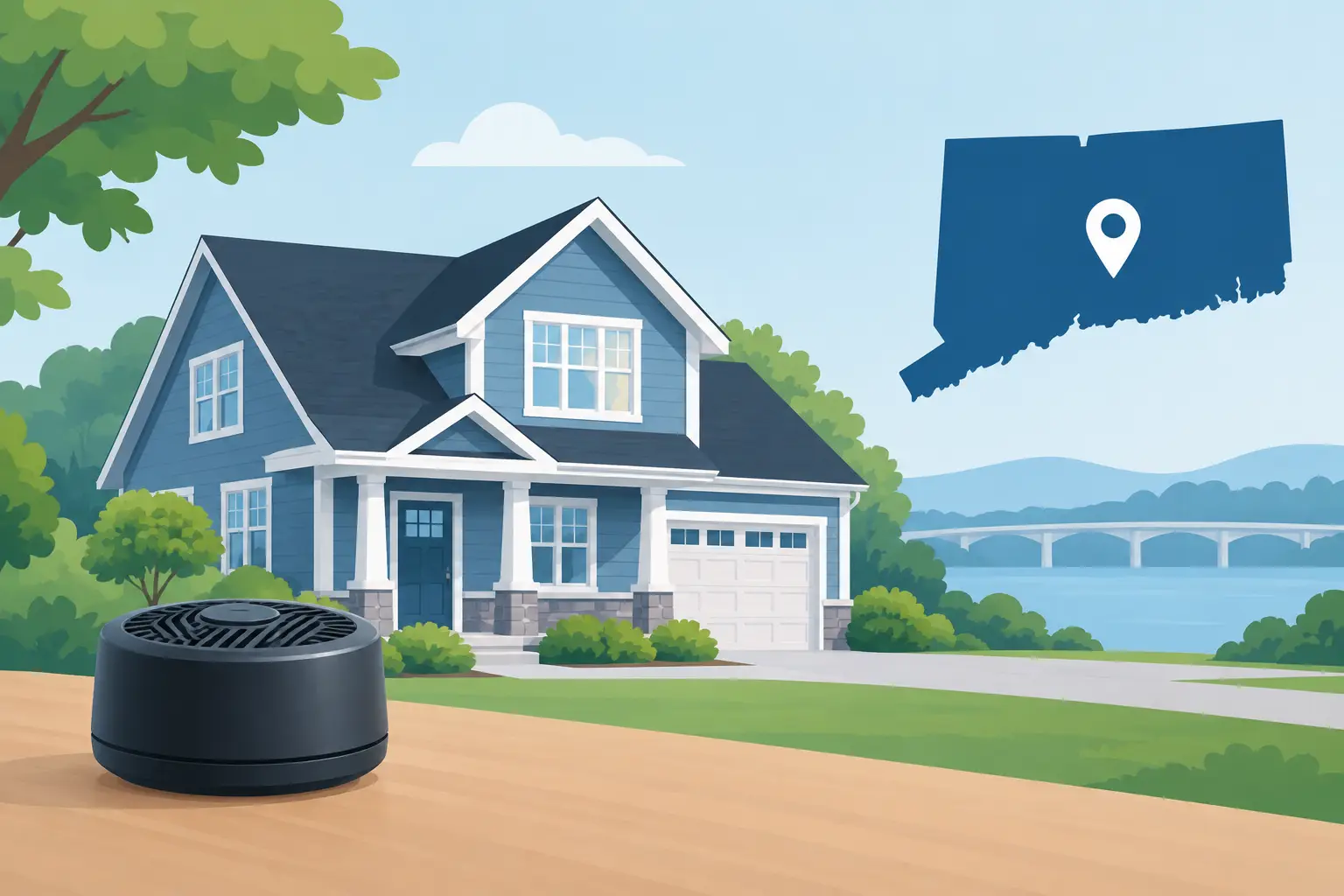
For many real estate transactions, a short-term radon test is the most practical choice. A qualified inspector places a continuous radon monitor in the lowest livable level of the home. If the basement is unfinished and not used as living space, the test may still be placed there when that is the level most likely to represent radon entry.
The monitor typically remains in place for at least 48 hours. It records radon levels over time and may also document conditions that could affect the test, such as movement or unusual environmental changes. This creates a more reliable record than a simple device that provides only one final reading.
During the test period, closed-house conditions are generally required. Exterior windows and doors should stay closed except for normal entry and exit. Heating and cooling systems should operate normally. Avoid whole-house fans, window fans, and other conditions that significantly change indoor air movement.
Do not try to alter the home environment to influence the result. Opening windows for extended periods, running unusual ventilation equipment, moving the device, or placing it near drafts can compromise the test. A valid result protects everyone involved in the transaction because it provides a clearer basis for decisions.
Short-term versus long-term testing
Short-term testing is designed for real estate timelines. It provides a useful snapshot, usually over two to several days, and allows buyers and sellers to address findings within an inspection contingency period.
Long-term testing runs for more than 90 days and better reflects average radon exposure across changing weather and household conditions. It can be especially useful for homeowners who are not under a contract deadline, or when they want additional information after a lower but still concerning short-term result.
Neither method is automatically right in every situation. For a pending purchase, a professionally conducted short-term test is often the appropriate first step. For long-term health planning, a longer measurement period may provide a fuller picture.
Understanding your radon test result
Radon results are reported in picocuries per liter of air, written as pCi/L. The U.S. Environmental Protection Agency recommends taking action to reduce radon when a home’s result is 4.0 pCi/L or higher.
A reading below 4.0 pCi/L does not mean there is zero radon present. There is no known completely risk-free level of radon exposure, which is why homeowners may choose to consider mitigation at lower readings as well. A level around 2.0 pCi/L or higher is commonly a point where additional testing or mitigation is worth discussing.
Think of the number as a decision tool, not a pass-or-fail grade for the house. Elevated radon is common and usually manageable. It should be addressed seriously, but it is not typically a reason to walk away from an otherwise suitable property without first understanding the available solution.
What happens if radon is high?
The usual solution is a radon mitigation system installed by a qualified mitigation professional. In many homes, the system uses a pipe and fan to draw radon gas from beneath the foundation and vent it safely above the roofline. The system runs continuously and is designed to reduce indoor radon levels.
The exact approach depends on the house. A slab foundation, crawl space, sump pit, drainage system, or multiple foundation sections may require different techniques. Older homes can be mitigated, and a finished basement does not prevent effective mitigation. Access and layout may affect where equipment is placed.
After mitigation, conduct a follow-up test to verify performance. A system should not be judged only by its appearance or the fact that a fan is running. The post-mitigation result is what confirms whether radon levels have been reduced.
In a real estate transaction, buyers and sellers should put any radon agreement in writing. The agreement may address who will pay for mitigation, the qualifications of the installer, the target result, timing, and post-installation testing. Clear terms reduce misunderstandings near closing.
Common radon testing mistakes to avoid
The most common mistake is assuming that a home inspection includes radon testing. A standard home inspection evaluates many visible and accessible systems, but radon measurement is a separate environmental service and must be specifically requested.
Another mistake is testing only after a basement is finished; radon should be evaluated before that project begins, not after a family starts using the space every day. It is also a mistake to treat a prior test from years ago as current information, particularly after renovations or changes to heating, ventilation, or foundation drainage.
Home test kits can be useful for an initial screening, but real estate decisions often call for documented testing performed under controlled conditions. If a do-it-yourself kit indicates an elevated result, confirm the finding and discuss the appropriate next step with a qualified professional.
What about radon in well water?
Radon in water is a separate concern from airborne radon. Homes with private wells may benefit from water testing based on local conditions and property history, but an air test does not measure radon in water. If water is a concern, ask for the right type of test rather than assuming one environmental result answers every question.
A clear next step for your property
Radon is a manageable property condition when it is identified and addressed accurately. Whether you are buying, selling, or simply checking the home where your family lives, a professional test gives you a documented starting point for a sound decision.
Grizzly Home Inspections provides clear radon testing information for Connecticut clients, so you can understand the result, ask informed questions, and move forward with confidence.