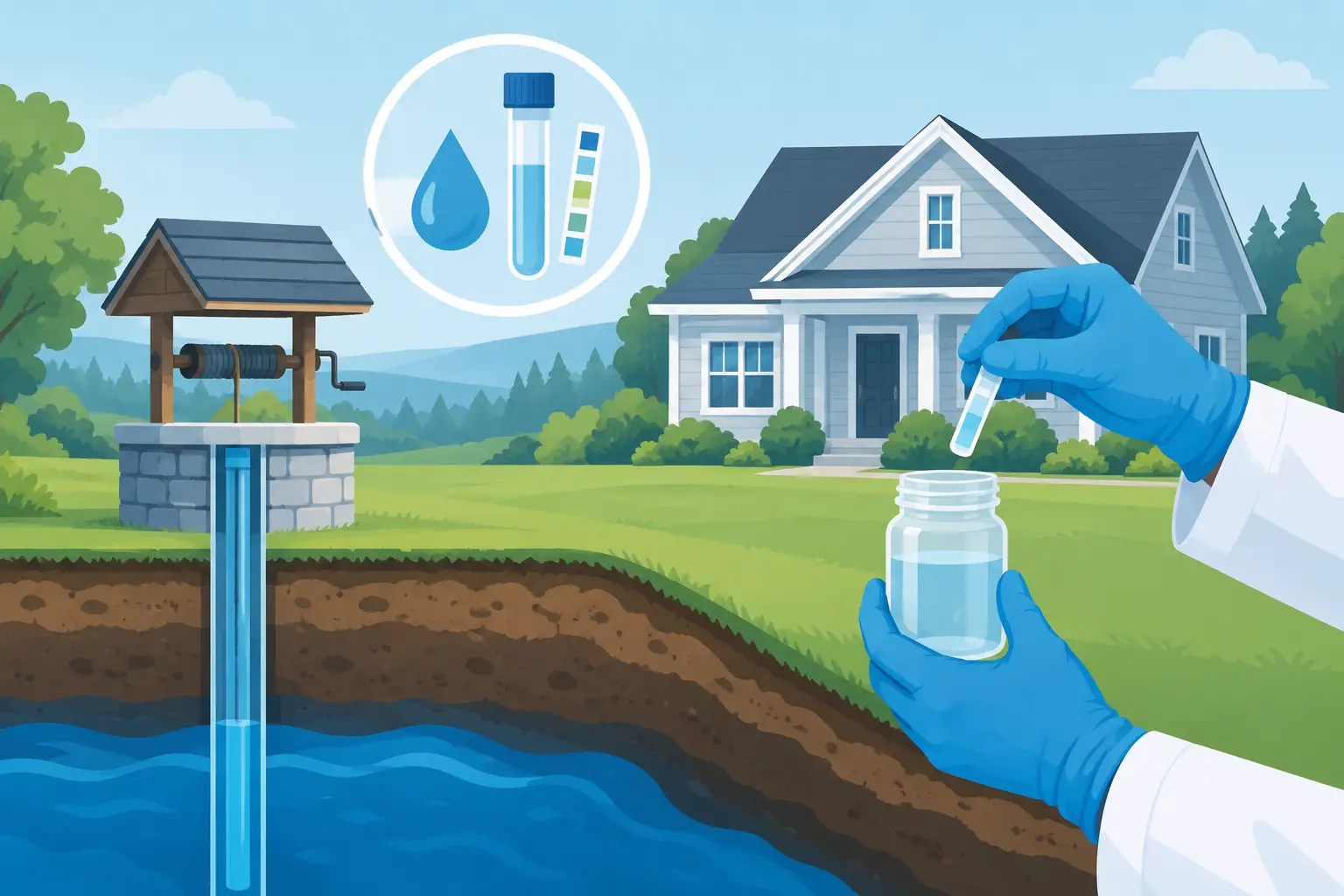
A clear glass of water can still contain contaminants that affect your health, plumbing, or a real estate decision. Private well water testing, which Connecticut homeowners arrange, is not just a box to check during a purchase. It is a practical way to understand what is coming from the tap before a family moves in, a buyer removes an inspection contingency, or a homeowner invests in a treatment system.
Unlike public water systems, private wells are not routinely monitored by a utility. The well owner is responsible for testing, interpreting the results, and responding when a concern appears. For Connecticut buyers and homeowners, that makes accurate sampling and clear reporting especially valuable.
Why Private Well Water Testing in Connecticut Matters
Connecticut’s geology, older housing stock, seasonal weather, and local land use can all influence well water quality. A well may produce plenty of water and still have a quality issue. Conversely, water with a noticeable odor or orange staining may be unpleasant but not necessarily indicate the most serious health concern. Testing separates assumptions from facts.
Some issues occur naturally as groundwater moves through soil and rock. Others can result from surface runoff, a compromised well cap, nearby septic conditions, road salt, agricultural activity, plumbing materials, or past property uses. Conditions also change over time. A result from several years ago does not confirm that the water is still the same today.
For a home buyer, water results can influence negotiations, repair requests, and the decision to move forward. On the seller’s side, testing before listing can prevent a surprise late in the transaction. As for an established homeowner, it can help explain recurring plumbing problems, unusual taste, discoloration, or concerns after flooding, well repairs, or a septic issue.
What a Well Water Test May Look For
The right test depends on the property, the well, and the reason for testing. A basic test commonly looks at indicators of bacterial contamination and general water chemistry. Additional testing may be appropriate based on the location, property history, visible conditions, or lender requirements.
Common parameters include coliform bacteria and E. coli, which can signal that surface water or waste-related contamination has entered the system. Nitrate and nitrite may be important where land use or septic conditions raise concern. pH, hardness, iron, manganese, chloride, sodium, and total dissolved solids help describe water chemistry that can affect taste, staining, corrosion, and appliances.
In some Connecticut locations, testing for naturally occurring contaminants such as arsenic, uranium, or radon in water may be worth discussing. Lead is also a separate concern, particularly in older homes, because it can come from plumbing components rather than the well itself. If a property has a history of fuel storage, industrial use, dry cleaning, or other potential chemical exposure nearby, a broader analysis may be reasonable.
There is no single panel that fits every home. Ordering too limited a test can leave key questions unanswered, while testing for every possible contaminant without a property-specific reason can add cost without improving the decision. An experienced inspector can help identify a sensible scope based on the home and the concern at hand.
When Should You Test a Private Well?
A real-estate transaction is one of the most important times to test. Ideally, the water sample is collected early enough in the inspection period to allow time for laboratory results, review, and follow-up if needed. Waiting until the final days before closing can create unnecessary pressure for everyone involved.
Homeowners should also consider testing annually for bacteria and whenever there is a change in taste, odor, color, or water pressure. Testing is also sensible after a flood, major storm, septic backup, well repair, pump replacement, or a period when the property sat vacant. If infants, pregnant individuals, older adults, or people with weakened immune systems live in the home, prompt attention to any water-quality concern is particularly wise.
A change in water appearance does not always mean the source water changed. For example, brown water may be caused by iron, sediment, or disturbance in the plumbing. Still, it should be investigated rather than ignored. The same is true of a sulfur-like odor, blue-green staining, or a salty taste.
Water Quality and Well Flow Are Different Tests
Water-quality testing tells you what is in the water. A well-flow test evaluates whether the well and related equipment can provide water at a usable rate over time. Both matter to a buyer, but they answer different questions.
A home can have clean water but an inadequate supply for the household’s needs. It can also have strong flow but bacteria or chemistry concerns that require correction. When a property relies on a private well, coordinating both services provides a more complete view of the system.
Why Proper Sampling Makes a Difference
Water testing is only as useful as the sample collected. The sampling location, procedure, timing, containers, preservation, and delivery to the laboratory all matter. Bacteria samples in particular can be affected by improper handling or by sampling from a faucet with a dirty aerator, treatment device, or other condition that does not represent the water being evaluated.
Before sampling, it may be necessary to avoid using certain filters or to choose a faucet that best reflects the relevant part of the water system. A professional should follow the laboratory’s instructions carefully and document the sample information. This reduces the chance of results that are misleading, rejected by the lab, or difficult to use in a real-estate negotiation.
If a result is unexpected, do not assume the home has a permanent water problem before reviewing the circumstances. Retesting may be appropriate, especially for bacteria. The source could be the well, plumbing, treatment equipment, a recent weather event, or a sampling issue. The next step should be based on the specific result and the property’s conditions.
How to Respond to Test Results
A report should be read in plain language, not treated as a page of numbers with a pass-or-fail label. Some findings relate directly to health-based standards. Others indicate aesthetic or maintenance concerns, such as staining, scale buildup, or corrosion risk. Both can be relevant, but they call for different responses.
If bacterial contamination is identified, the response may involve inspecting the well cap and casing, reviewing drainage around the well, checking for nearby septic concerns, disinfecting the well when appropriate, and retesting afterward. If arsenic, uranium, nitrate, or another chemical contaminant is found, the right treatment depends on the concentration and the contaminant. A treatment professional may recommend point-of-use equipment for drinking water or a whole-house solution.
Be cautious about installing expensive equipment before identifying the actual issue. A water softener does not solve every water-quality problem, and a basic filter is not designed for every contaminant. Treatment should be selected from verified laboratory results, not from a guess based on taste or appearance.
For buyers, keep the inspection report, laboratory results, well records, and any treatment documentation together. These records support an informed negotiation now and make future maintenance easier. For sellers, providing current, organized information can help buyers understand that a known condition has been addressed rather than hidden.
A Practical Approach for Connecticut Buyers and Homeowners
Start with the property itself. Consider the age and condition of the well, the location of the septic system, visible drainage patterns, water-treatment equipment, and any known water concerns. Then choose a test scope that matches the home’s risk factors and your reason for testing.
Grizzly Home Inspections helps Connecticut clients evaluate private wells as part of a broader property decision, with clear explanations of what testing can and cannot tell you. The goal is accurate, detailed, and fast information that helps you decide what to ask, repair, monitor, or negotiate.
A well is a valuable source of water, but it deserves regular attention. Testing before a purchase and at sensible intervals afterward gives you a clearer picture of the system you rely on every day – and more confidence in the next decision you make.